A geyser is something most people rarely think about until the water stops heating properly. During winter, even a small problem with a water heater can become frustrating for an entire family. Sometimes the issue may be related to a thermostat or heating element, while in other cases, the fault may involve electrical connections or another internal component.
This is where a trained geyser repair technician becomes useful. For people interested in electrical work and appliance servicing, learning geyser repair can be a practical way to develop technical skills and explore career opportunities.
But how does someone become a geyser repair technician? It starts with understanding how the appliance works, learning basic electrical concepts, and gaining practical experience under proper supervision.
What Does a Geyser Repair Technician Do?
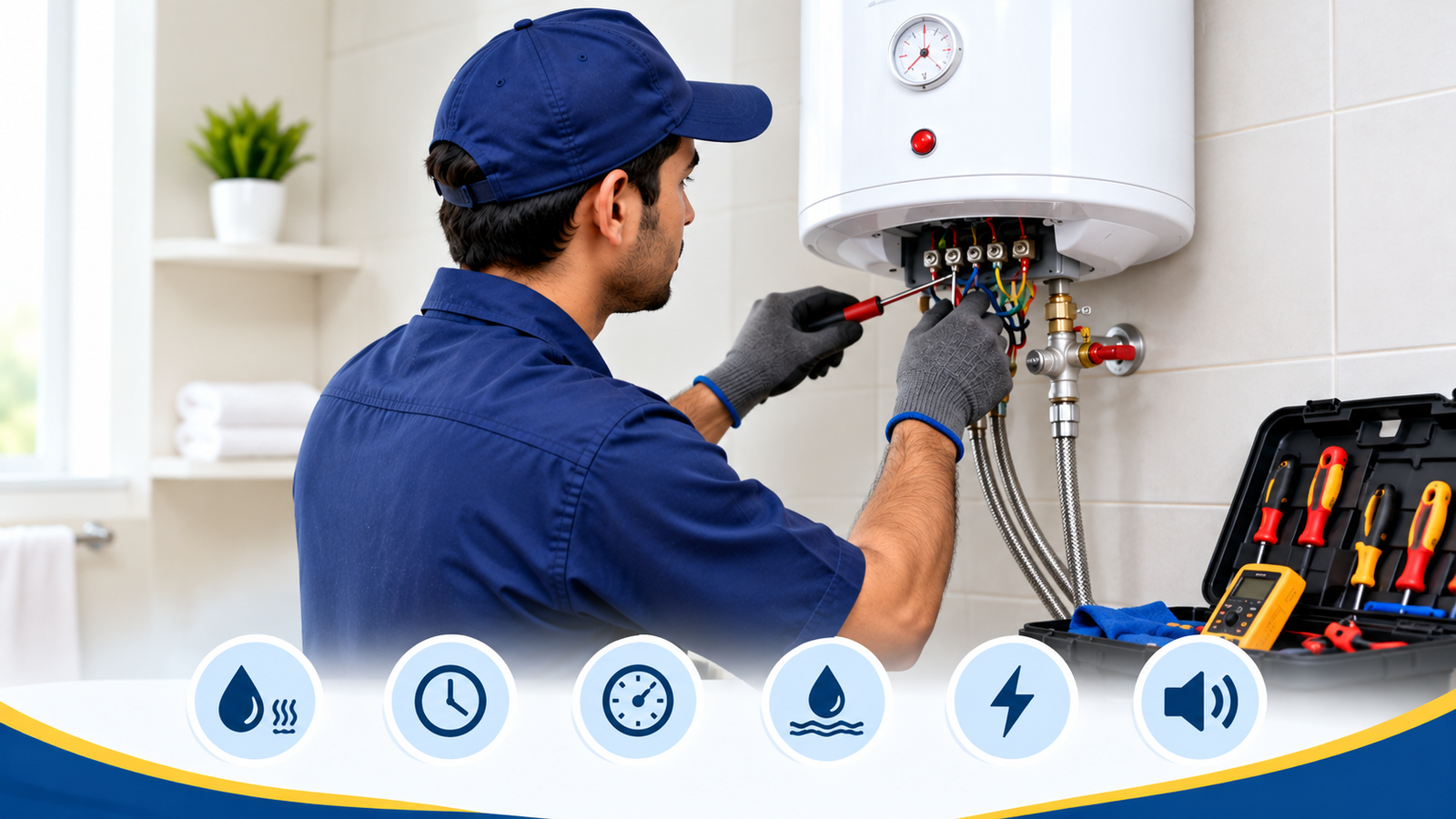
A geyser repair technician is responsible for inspecting, diagnosing, servicing, and repairing water heaters. The work involves more than simply replacing a faulty part. A technician needs to understand the appliance, identify the actual cause of a problem, and choose an appropriate repair method.
Some common problems technicians may encounter include:
-
Water not heating properly
-
Geyser taking too long to heat water
-
Thermostat or heating element faults
-
Water leakage around the appliance
-
Electrical tripping or safety-related issues
-
Unusual noises during operation
Not every problem has the same cause. For example, a geyser that fails to heat water may have a faulty heating element, a thermostat issue, or an electrical supply problem. Learning to distinguish between these possibilities is an important part of professional troubleshooting.
Essential Skills Every Beginner Should Learn
Anyone planning to enter appliance repair should begin with the fundamentals. Strong basic knowledge makes it easier to understand more complicated faults later.
1. Understanding Geyser Components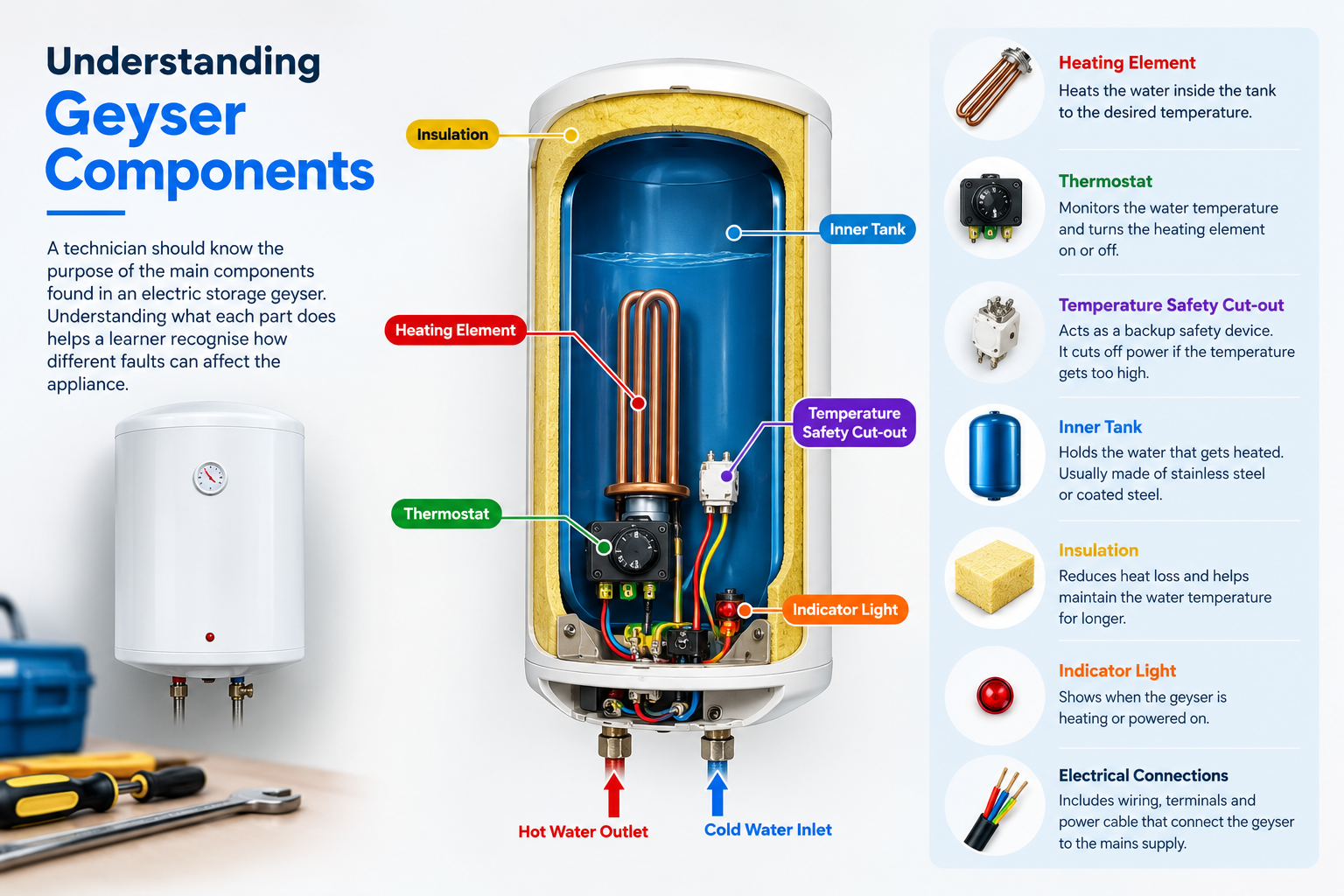
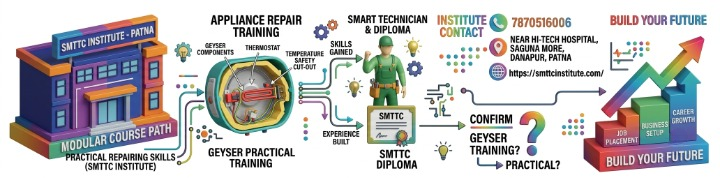
A technician should know the purpose of the main components found in an electric storage geyser. These may include the heating element, thermostat, temperature safety cut-out, inner tank, insulation, indicator light, and associated electrical connections.
Understanding what each part does helps a learner recognise how different faults can affect the appliance.
2. Learning Basic Electrical Concepts
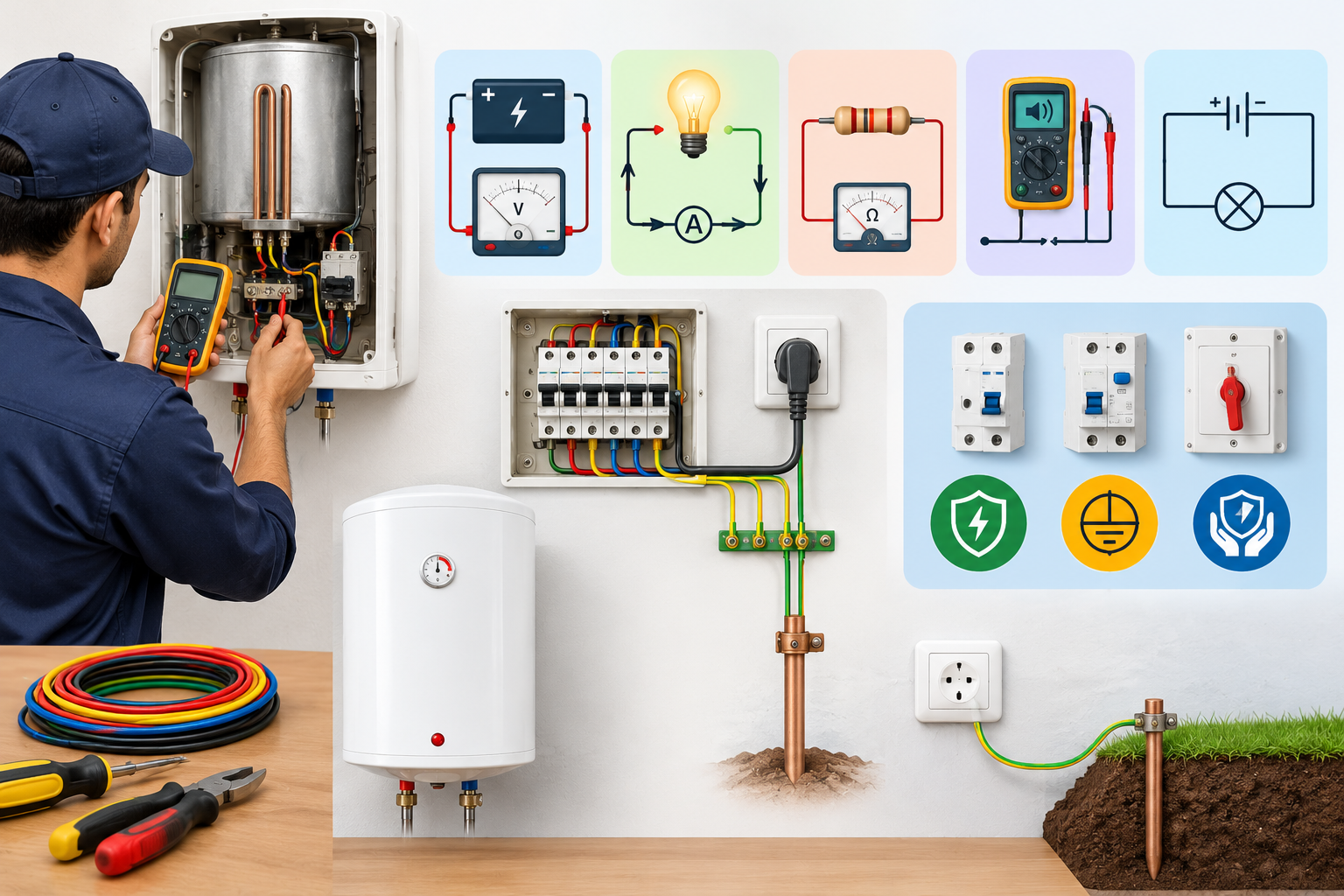 Geysers use electricity to heat water, so understanding electrical fundamentals is essential. Beginners should learn about voltage, current, resistance, continuity, and the basic principles of electrical circuits.
They should also understand why earthing, protective devices, and correct wiring matter. These concepts are important not only for repairing appliances but also for preventing electrical hazards.
3. Identifying Common Faults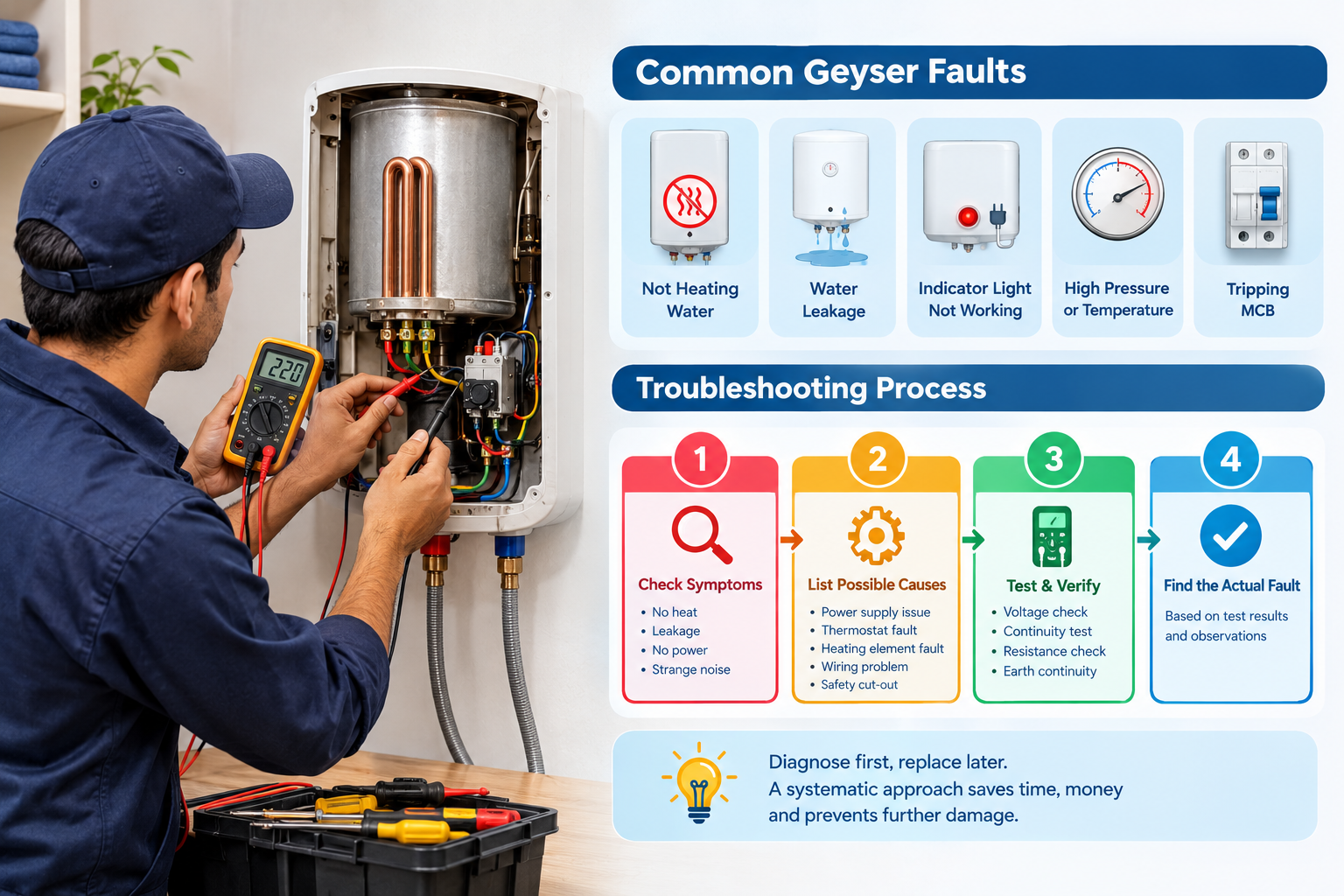
Good technicians do not replace components randomly. They follow a systematic process to understand what is wrong.
For instance, if a geyser is not heating, the technician must investigate the possible causes instead of immediately assuming that the heating element is defective.
Learning how to identify symptoms, assess possible causes, and interpret test results helps beginners develop a more reliable troubleshooting approach.
4. Using Repair Tools Correctly
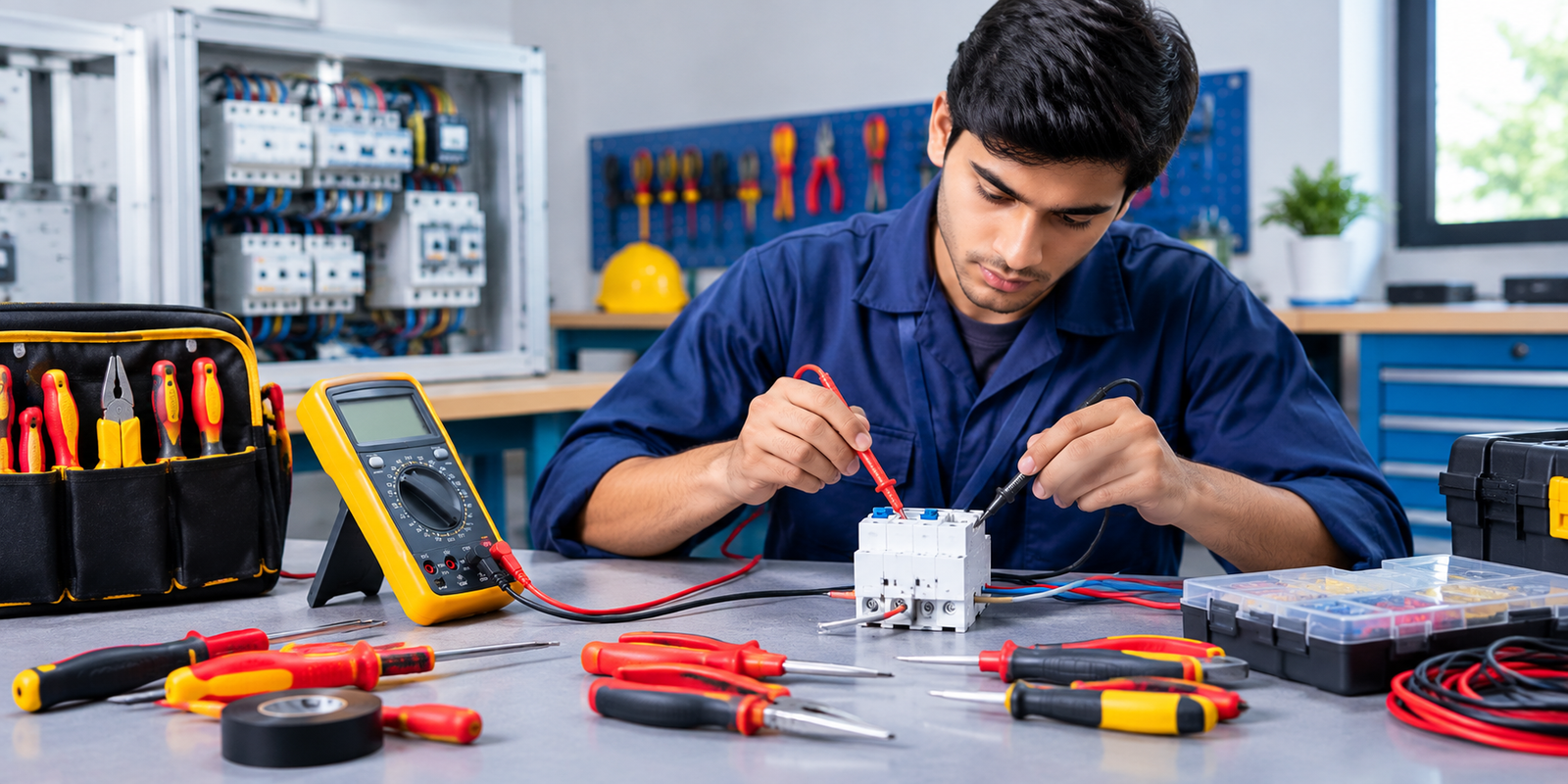
A multimeter is one of the important tools used in electrical fault diagnosis. Depending on the task, technicians may also use suitable insulated hand tools and other testing equipment.
Beginners need to understand what each tool is designed to do and how it should be used. Electrical measurements must only be performed by trained individuals using appropriate procedures and equipment.
Why Is Practical Training Important?
Reading about geyser components is useful, but theoretical knowledge alone cannot prepare someone for every repair situation.
During practical training, learners can study actual components, understand how parts are connected, and observe how technicians approach common faults. With supervised practice, they can gradually develop the ability to inspect an appliance and follow a logical diagnostic process.
A structured Geyser Repairing Course should ideally cover component identification, basic electrical testing, fault diagnosis, servicing procedures, and essential safety practices.
Training should also explain when a repair is beyond a beginner's ability. Water heaters combine electricity, water, heat, and pressure, so mistakes can create serious risks. Before any inspection or repair, the power supply must be isolated, and the appliance must be handled according to the manufacturer's safety instructions. Internal repairs should be performed by appropriately trained personnel.
Tools Used in Geyser Repairing
The tools required depend on the appliance and the type of fault being investigated. Some commonly used tools and equipment include:
|
Tool or equipment |
Purpose |
|
Digital multimeter |
Electrical measurements and suitable continuity checks |
|
Insulated screwdrivers |
Working with compatible fasteners |
|
Appropriate spanners |
Removing or securing suitable mechanical fittings |
|
Replacement components |
Replacing confirmed faulty parts with compatible components |
|
Personal protective equipment |
Supporting safe working practices |
Having the correct tools is important, but knowing how to use them properly matters just as much. A technician should always follow the manufacturer's instructions and applicable electrical safety requirements.
Career Opportunities After Learning Geyser Repairing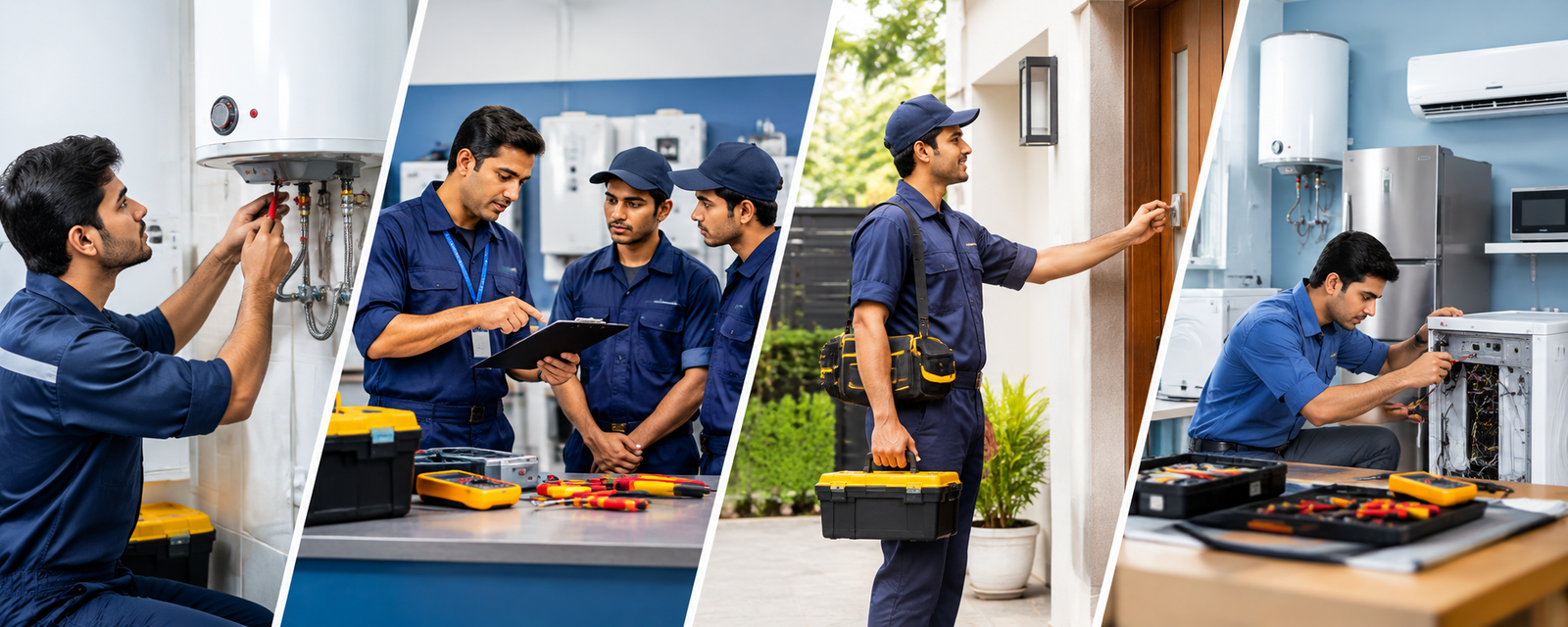
Once a learner develops practical skills and gains sufficient experience, several career paths may become possible.
Working with an appliance service centre: A technician may seek an entry-level role with a company that services water heaters and other household appliances.
Joining a repair team: Working alongside experienced technicians can help beginners learn how to handle different customer complaints and service situations.
Providing independent services: After developing the necessary competence, tools, and business knowledge, a technician may consider offering repair services independently.
Expanding into appliance repair: Geyser servicing can also complement knowledge of other household appliances, depending on the learner's interests and further training.
Career progress depends on practical ability, experience, customer service, and the availability of work. Completing a course can provide a foundation, but it does not automatically guarantee employment or business success.
Choosing Geyser Repairing Training in Patna
For beginners, choosing suitable training involves more than comparing course names. It is worth checking what the syllabus covers, whether learners receive supervised practical exposure, what tools and components they work with, and how safety is taught.
Students from Saguna More, Danapur, Khagaul, and Bailey Road can explore technical training options in Patna and consider travel convenience when selecting an institute. Learners from Phulwari Sharif and Anisabad may also look into available options based on their requirements.
If you are searching for a Geyser Repairing Course in Patna, ask the institute about the specific training modules available. Confirm whether geyser servicing is included in the practical syllabus before enrolling, as not every appliance repair programme covers every type of water heater.
Final Thoughts
Becoming a geyser repair technician takes patience, technical understanding, and regular practice. Learning about heating elements, thermostats, electrical connections, and troubleshooting can help beginners build a foundation for working with water heaters.
The most useful training is the kind that teaches learners to understand a fault rather than simply replace a part. Combined with safe working habits and experience, these skills can support further development in the appliance servicing field.
For anyone interested in technical work, geyser repair is worth exploring as part of a broader appliance repair skill set.
Learn Practical Repairing Skills with SMTTC Institute
Interested in developing technical skills in Patna? Contact Smart Technical Training Institute (SMTTC) to enquire about available appliance repair training, course modules, and practical learning options.
Institute: Smart Technical Training Institute (SMTTC)
Address: Near Hi-Tech Hospital, Saguna More, Balaji Nagar, New Tarachak, Danapur, Patna, Bihar – 801503
Phone: 7870516006
Website: https://smttcinstitute.com/
Contact the institute to confirm whether geyser-specific practical training is currently available.
Learn Skills. Gain Experience. Build Your Future.