
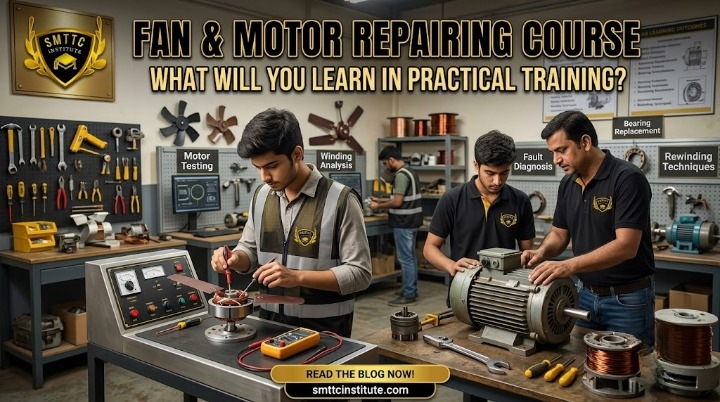
Fans and motors find applications in homes, offices, stores, workshops, and even more places. There are ceiling fans, table fans, exhaust fans, and various other types of motors which can face difficulties at any time during their usage because of various reasons like normal usage, loose connections, worn out parts, overheating, electrical failures etc. Thus, practical repairing skillful people can repair all kinds of common electrical equipment.
Fan & Motor Repairing Course is intended for the students who are interested in learning about fans and motors and how to detect and repair their common faults. Practical training differs from theoretical training in that you will be dealing with real components, tools, wiring and faulty devices to understand the whole process of repairing.
If you are a beginner and have no experience in practical repairing, then practical training can be a good starting point for you to learn about electrical components, structure of motors, testing techniques, dismantling, assembling, wiring, detection of faults and repairing.
What Is a Fan & Motor Repairing Course?
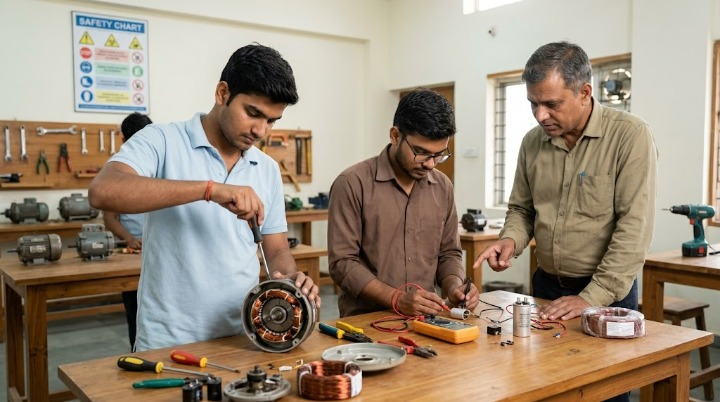
Fan & Motor Repairing Course is a program in which an individual learns about the practical skills needed to work on various fans and motors through servicing, troubleshooting, and repair processes.
In such a course, the student will be exposed to various aspects of electricity and repairing. Initially, the students will become aware of the various electrical tools and components used.
Subsequently, they will learn how the components function together in the different fans and motors. After grasping the theoretical knowledge of electrical principles, the practicals would include checking of electrical connection, testing of components, detection of the fault, disassembling the equipment, replacement of the faulty part, and retesting the equipment.
The main aim is not to learn the repairing process only. This course enables an individual to know how to go about diagnosing a fault.
For instance, when a fan fails to start, the technician should be able to know whether the problem is associated with the power source, wiring, switch, capacitor, winding, bearing, or other components.
What Will You Learn During Practical Training?
The exact syllabus can vary depending on the training program, but practical Fan & Motor Repairing Course training can cover several important areas.
1. Basic Electrical Concepts
Students need to learn some fundamental electrical principles before proceeding with fan and motor study. Through training, students will be introduced to voltage, current, resistance, electrical connections, conductors, insulation, and fundamentals of circuits.
With this information, students will be able to figure out why a certain part is needed and how electricity flows within the circuit.
The knowledge of fundamental electrical principles is extremely helpful when troubleshooting repairs since most problems have to do with finding where the electricity stops flowing.
2. Identification of Fan and Motor Parts
Students learn to recognize different components used in fans and motors.
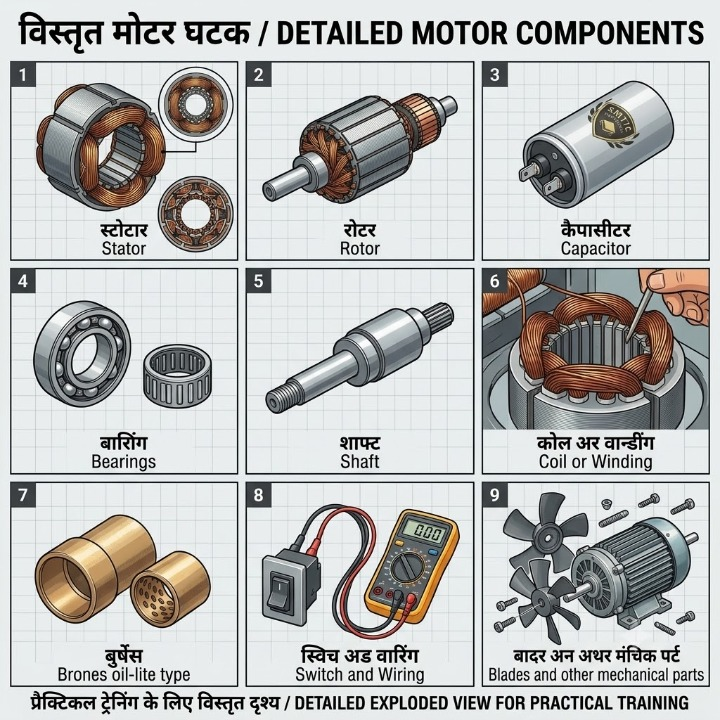
For fans, this may include:
-
Stator
-
Rotor
-
Capacitor
-
Bearings
-
Shaft
-
Coil or winding
-
Bushes
-
Switch and wiring
-
Blades and other mechanical parts
For motors, students may become familiar with components such as:
-
Stator
-
Rotor
-
Shaft
-
Bearings
-
Windings
-
Capacitor
-
Terminal connections
-
Insulation
-
Other mechanical and electrical components
Understanding these parts makes it easier to locate a fault during practical work.
3. Using Electrical Testing Tools
One of the key elements of practical repair work is the skill of using testing equipment correctly.
Students may gain knowledge about the practical application of such testing equipment as multimeter, tester, pliers, screwdrivers, wire stripper, soldering devices and other common repairing devices.
The multimeter should be highlighted here, as it will assist technicians in the process of measuring electrical continuity, resistance and other factors, depending on the type of testing.
Practical skills of using testing equipment is crucial, since improper testing may lead to faulty diagnosis and unnecessary parts replacement.
4. Fan Dismantling and Assembly
In a Fan Repairing Course, students need to understand how a fan can be safely opened and reassembled.
Practical sessions can cover:
-
Removing external parts
-
Opening the motor housing
-
Checking internal components
-
Inspecting bearings and shaft
-
Examining wiring
-
Checking the capacitor
-
Understanding winding connections
-
Reassembling the fan
-
Testing the fan after repair
Repeated practical work helps students understand the arrangement of different components.
5. Understanding Fan Winding
Fan winding is an important technical area when learning fan repair.
Students can learn about winding structure, winding connections, coil-related faults, and basic methods used to identify winding problems. Depending on the training level, practical sessions may also introduce rewinding-related concepts and procedures.
The objective is to help students understand the relationship between winding and motor operation rather than simply replacing components.
6. Capacitor-Related Faults
A faulty capacitor can affect fan performance. Symptoms may include difficulty starting, slow rotation, or abnormal operation.
During practical training, students can learn how to identify symptoms associated with capacitor problems and how to test the relevant component using appropriate methods.
Understanding capacitor-related faults is useful because not every slow or non-starting fan has the same underlying problem.
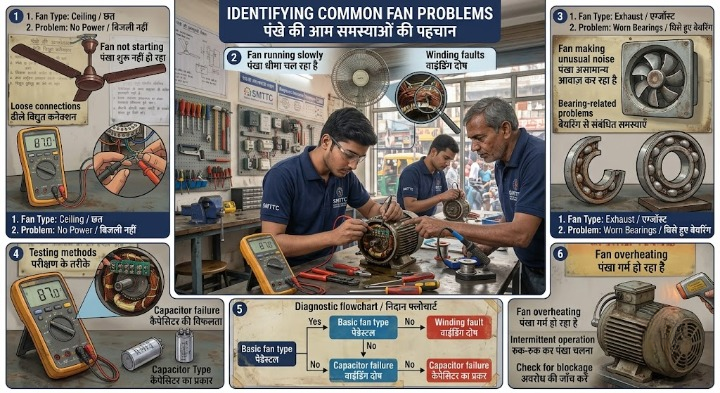
7. Identifying Common Fan Problems
A practical Fan Repairing Course should expose students to different types of faults.
Some common problems that students may learn to troubleshoot include:
-
Fan not starting
-
Fan running slowly
-
Fan making unusual noise
-
Fan overheating
-
Fan stopping intermittently
-
Loose electrical connections
-
Capacitor failure
-
Bearing-related problems
-
Winding faults
-
Wiring issues
Students learn to inspect the equipment, perform relevant tests, identify the faulty section, carry out the repair, and test the equipment again.
What Will You Learn in a Motor Repairing Course?
A Motor Repairing Course focuses on understanding motor construction, operation, electrical connections, testing, maintenance, and fault diagnosis.
Students can learn how motors convert electrical energy into mechanical movement and how different internal components contribute to this process.
1. Motor Construction and Working
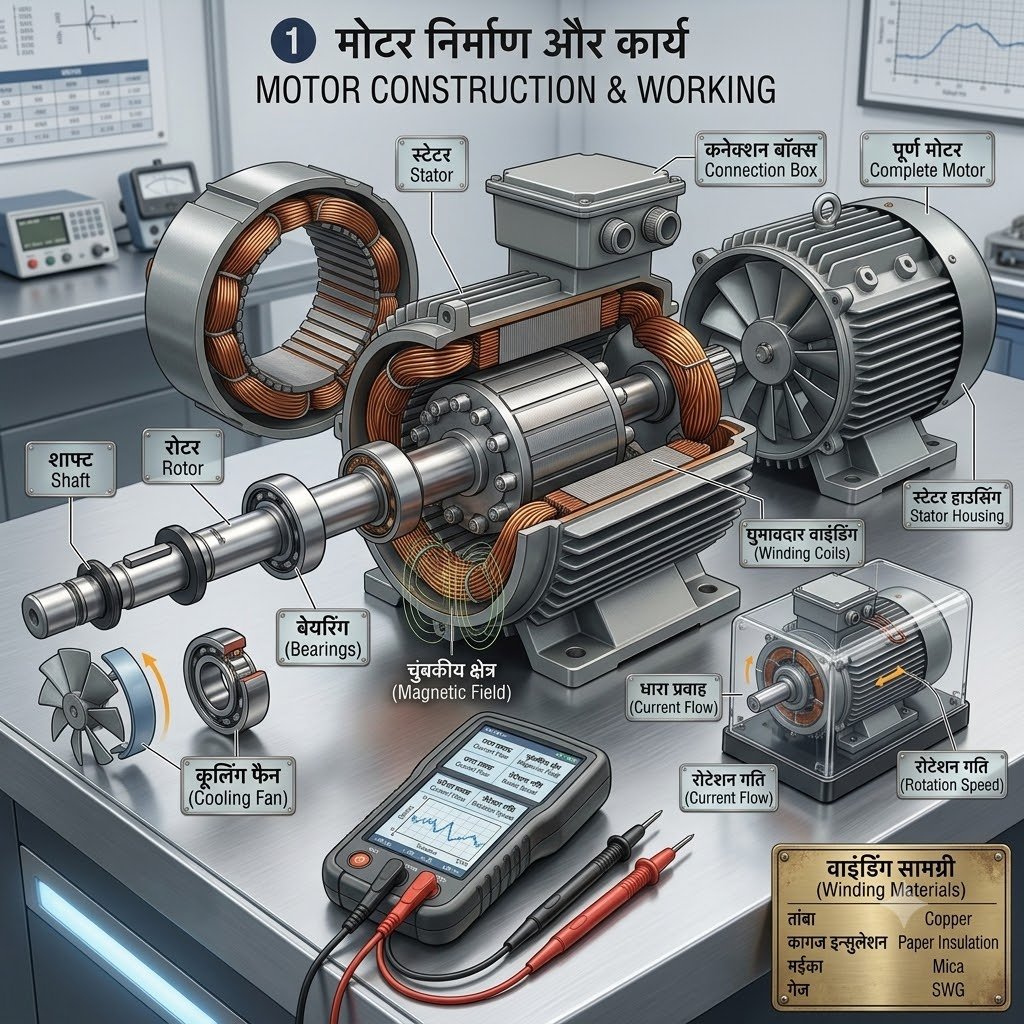
Students learn about the basic structure of a motor and the role of its major components.
Understanding the relationship between the stator, rotor, winding, shaft, bearings, and electrical connections provides the foundation for motor troubleshooting.
2. Motor Testing
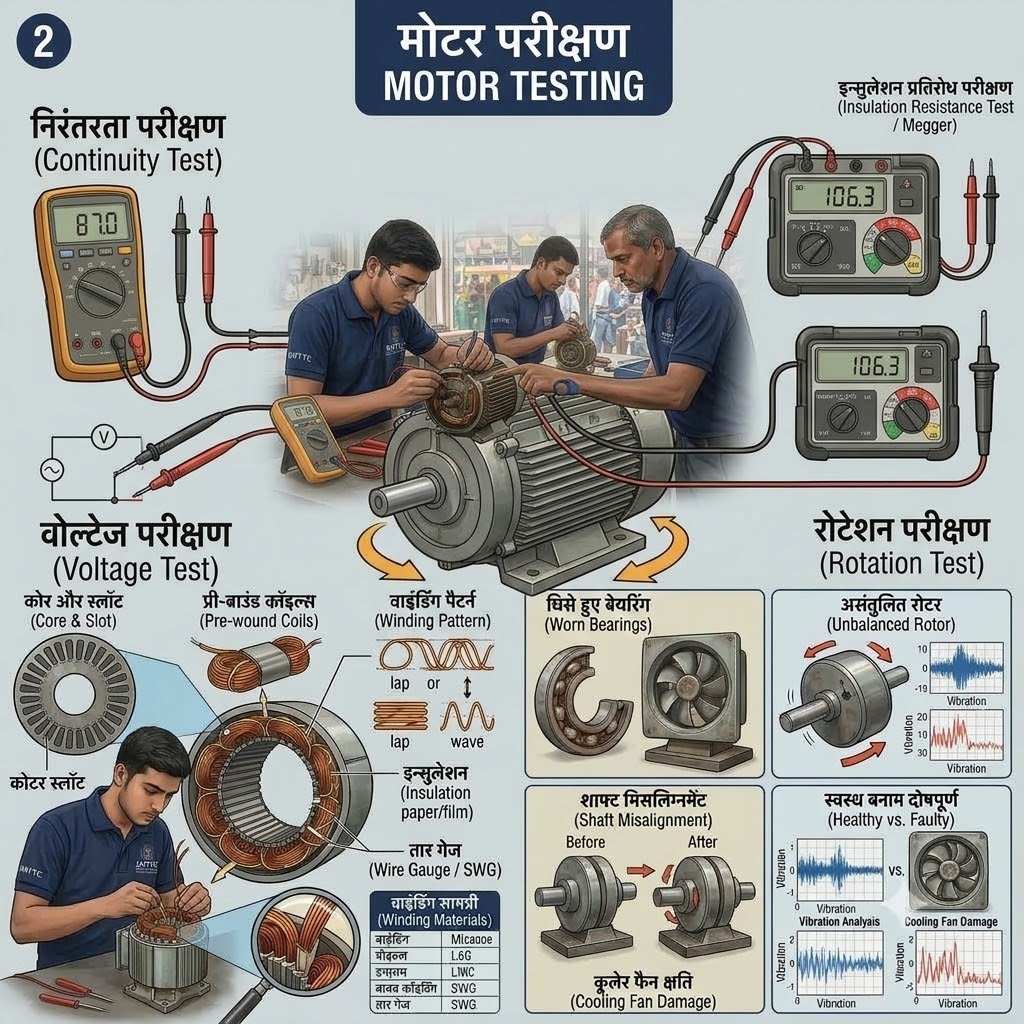
Testing is an important part of motor repair.
Students can learn how to inspect a motor before opening it and how to perform appropriate electrical checks. They can also learn how to identify signs of winding problems, loose connections, overheating, mechanical resistance, or other faults.
Practical testing teaches students to diagnose problems systematically.
3. Motor Winding Basics
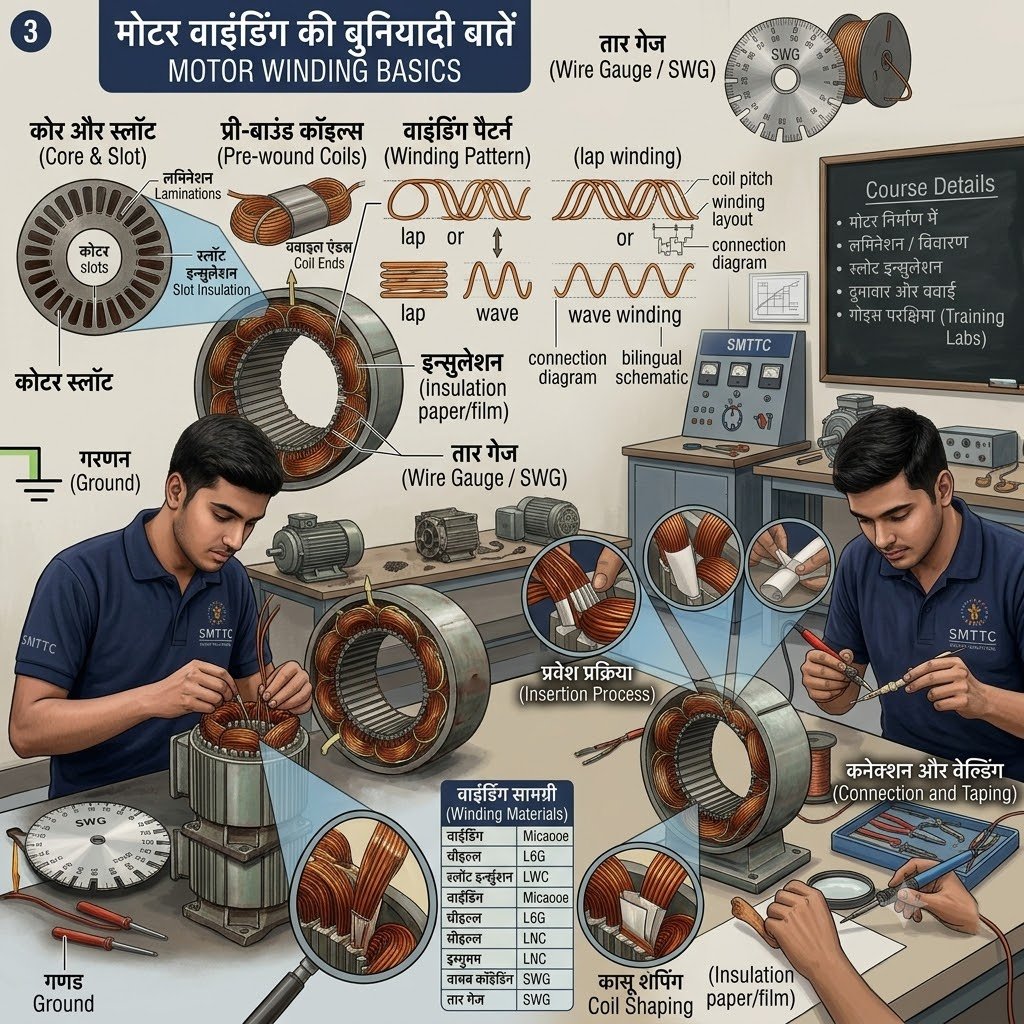
Winding is one of the technical
areas that students may encounter during motor repair training.
Depending on the course level, practical sessions can introduce winding types, coil connections, winding-related faults, and basic rewinding procedures.
Students can learn why correct winding connections and insulation are important for motor performance.
4. Bearing and Mechanical Problems
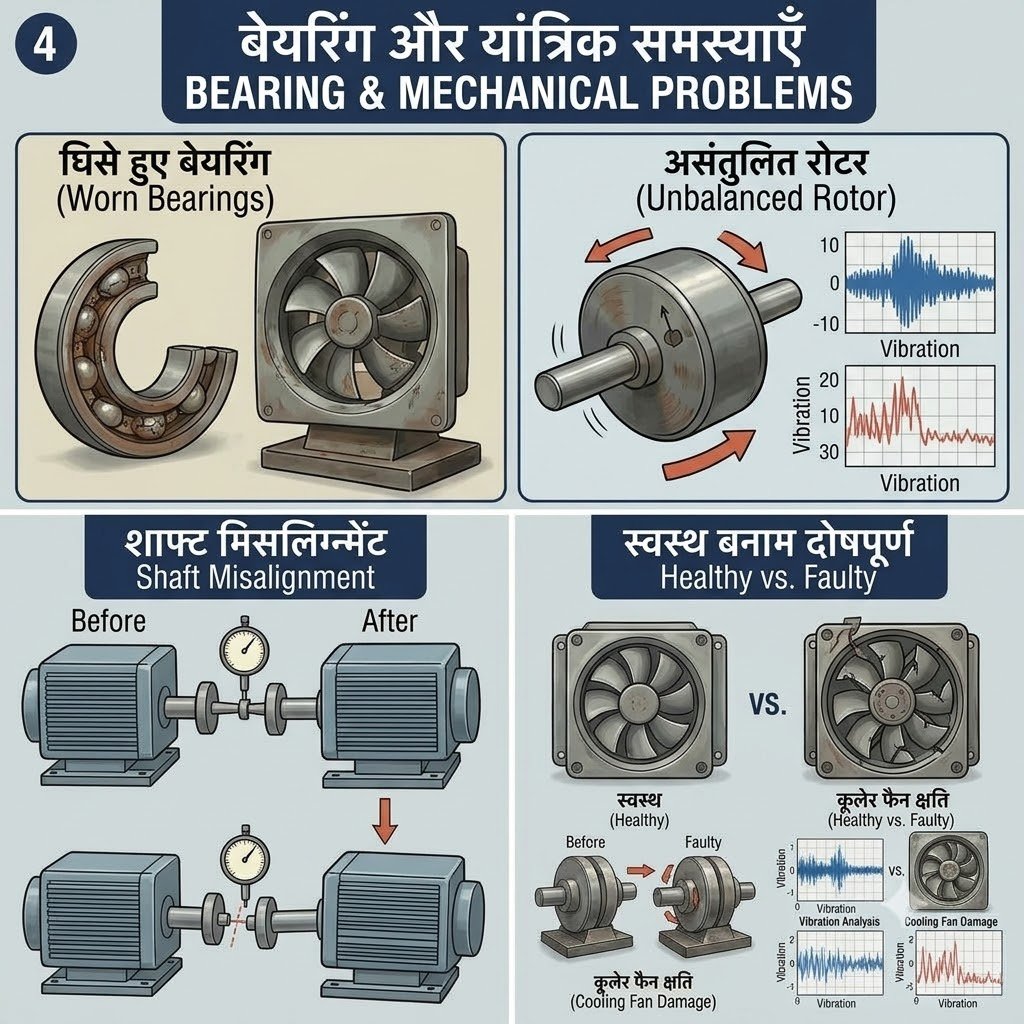 Not every motor problem is electrical.
A motor can also experience mechanical issues involving bearings, shafts, alignment, or excessive friction. Students learn how to distinguish between electrical and mechanical symptoms and inspect the relevant components.
This helps prevent unnecessary electrical repairs when the actual problem is mechanical.
Learning Fault Diagnosis Instead of Guesswork
One of the most valuable parts of practical training is developing a systematic approach to troubleshooting.
Suppose a motor does not start. A beginner might immediately assume that the winding is damaged. However, a trained technician can check the power supply, wiring, terminals, capacitor where applicable, mechanical movement, and winding before deciding what the actual fault is.
A practical training approach can follow a process such as:
Customer Complaint → Visual Inspection → Testing → Fault Identification → Repair → Reassembly → Final Testing
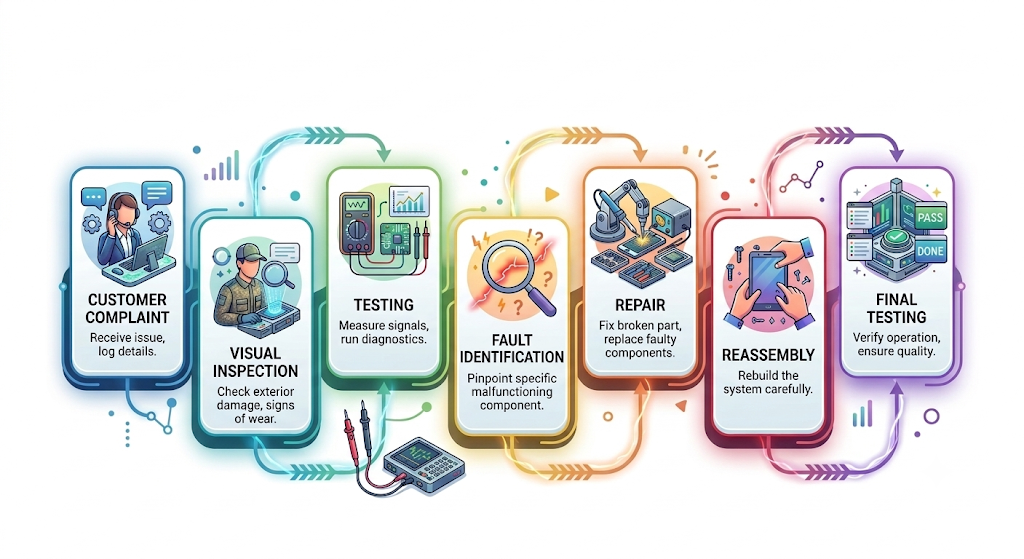
This method helps students develop problem-solving skills that can be applied to different types of equipment.
Electrical Safety and Workshop Practices
Safety is another important part of fan and motor repair training.
Students should understand the importance of disconnecting power before working on electrical equipment and following appropriate workshop safety procedures.
Training can introduce practices such as:
-
Checking equipment before starting work
-
Using suitable tools
-
Maintaining proper insulation
-
Avoiding exposed live connections
-
Keeping the work area organized
-
Handling electrical components carefully
-
Testing equipment properly after repair
Good safety habits are essential for anyone planning to work professionally with electrical equipment.
Fan & Motor Repairing Training in Patna
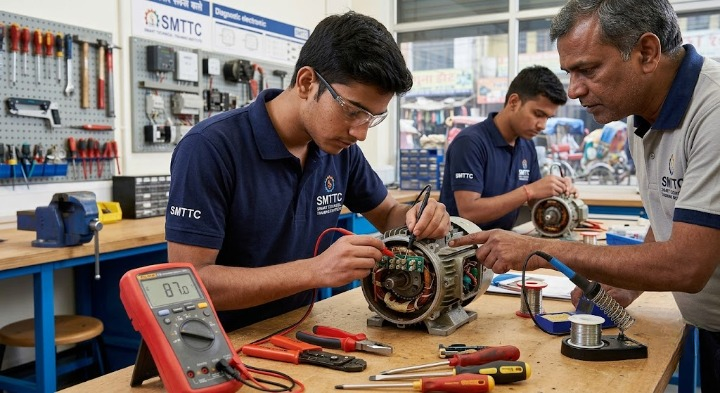
For the students who are seeking for fan motor repairing training in Patna, practical learning could prove to be beneficial for developing technical skills related to practical life repairs.
Patna offers a huge number of residential and commercial zones where there is usage of electrical appliances and machinery. Fans find application in homes, offices, shops, educational institutes and other places of business whereas motors are utilized in a wide variety of machines.
Practical learning of a skill could give another option for the student besides school and other educational institutes. The key aspect for a student is to learn about the machine, learn the correct testing technique and enough practical experience.
The students seeking fan and motor repairing course in Patna can seek practical training in place of theoretical classes.
Why Practical Training Matters
Reading about a motor or watching a repairing video can provide information, but handling an actual motor creates a different learning experience.
When students physically open a fan, identify its components, perform measurements, find a faulty part, repair it, and test the equipment, they get an opportunity to connect theoretical knowledge with practical work.
This repeated practice can improve familiarity with tools and components and help students develop a structured troubleshooting approach.
Technical training should therefore focus on both understanding and doing.
Skills You Can Develop
After completing practical training, students may develop knowledge and skills related to:
-
Fan component identification
-
Motor component identification
-
Electrical testing
-
Multimeter operation
-
Fan troubleshooting
-
Motor troubleshooting
-
Capacitor testing
-
Basic winding concepts
-
Wiring and connections
-
Dismantling and assembly
-
Mechanical fault identification
-
Preventive maintenance
-
Repair testing
-
Workshop safety
-
Problem-solving
These skills can form a foundation for further technical learning and practical experience.
From Training to Practical Work
Completing a course is only one stage of becoming a skilled technician. Continued practice and real-world experience are also important.
A student can gradually improve by working on different types of faults and learning how to handle different equipment conditions. With experience, technicians can become better at diagnosing faults efficiently and selecting suitable repair methods.
Depending on their skills and career goals, trained individuals may explore opportunities in repair shops, service work, maintenance-related roles, or independent repair services.
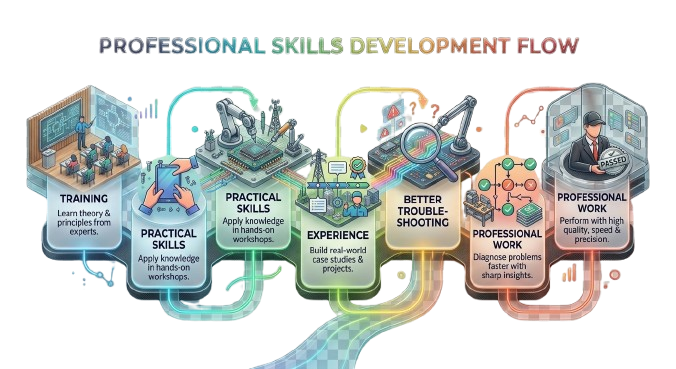
The journey can be understood as:
Training → Practical Skills → Experience → Better Troubleshooting → Professional Work
Choosing Practical Fan and Motor Training
When comparing technical training options, students should look at what they will actually practice during the course.
Important things to consider include:
-
Practical sessions with real equipment
-
Experienced trainers
-
Availability of repair tools
-
Coverage of common faults
-
Testing and troubleshooting practice
-
Component-level understanding
-
Safety procedures
-
Opportunity to repeat practical tasks
-
Guidance during hands-on work
A course becomes more useful when students are able to understand the reason behind each repairing step instead of simply copying a procedure.
Conclusion
A Fan & Motor Repairing Course can introduce students to the practical world of electrical equipment repair. From identifying components and using testing tools to understanding winding, capacitors, wiring, bearings, troubleshooting, and final testing, students can learn different stages of the repairing process.
The combination of theory and hands-on practice is especially important for beginners because it allows them to understand how fans and motors actually behave when a fault occurs.
For students searching for a fan & motor repairing course in Patna or fan motor repairing training in Patna, the main focus should be on practical exposure, systematic fault diagnosis, tool handling, and safety.
With regular practice and experience, the knowledge gained through training can become a foundation for further technical development and different types of repair work.
join us:
Join SMTTC Institute and learn practical fan & motor repairing skills through hands-on training.
📍 Near Hi-Tech Hospital, Saguna More, Balaji Nagar, New Tarachak, Danapur, Patna, Bihar – 801503
📞 Call: 7870516006
Start Learning. Build Skills. Create Opportunities.