
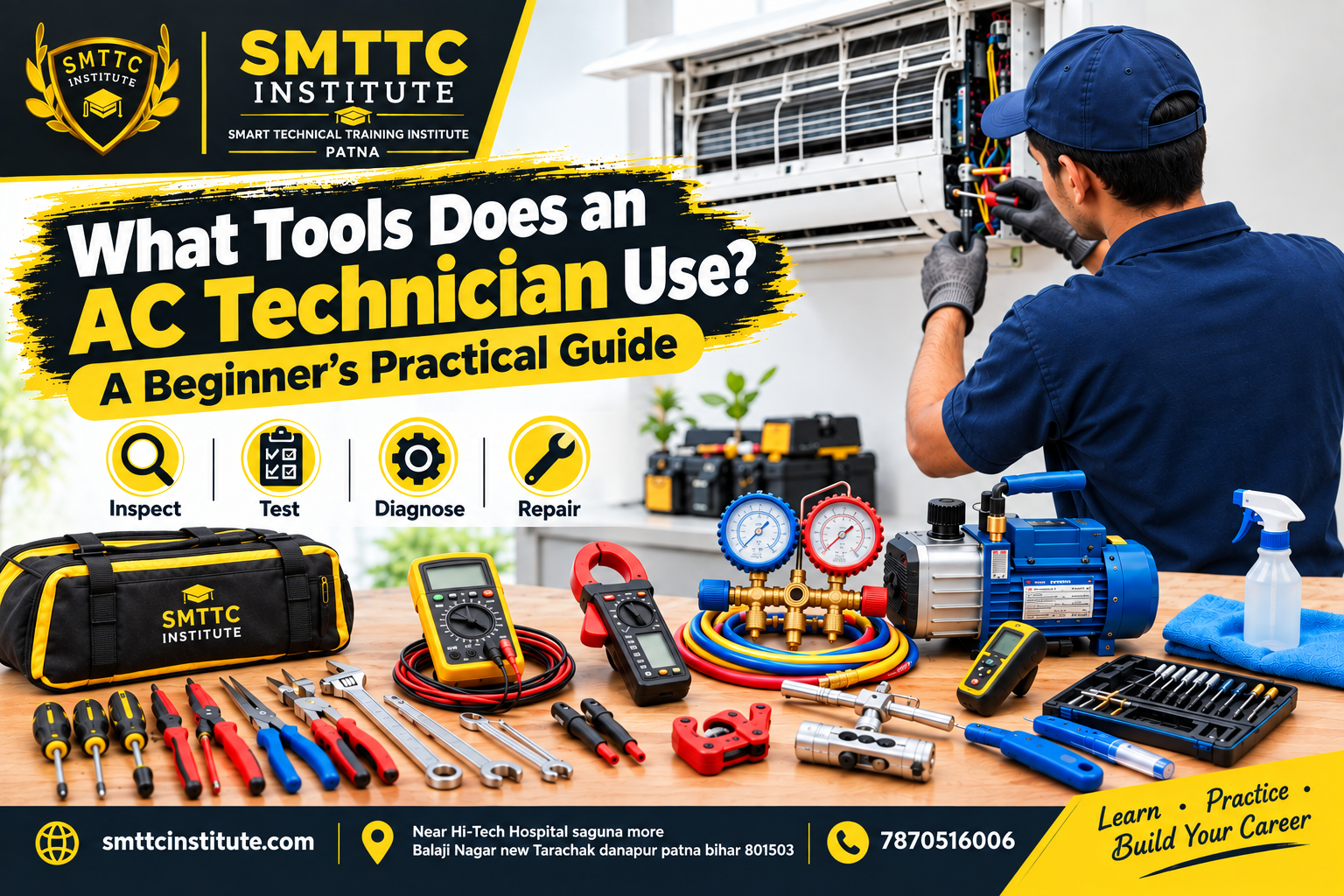
When an AC technician arrives for a service or repair, one of the first things you may notice is the number of tools they carry. A tool bag may contain screwdrivers, meters, gauges, wrenches, testing equipment and several other instruments. For someone new to AC repair, it can be difficult to understand what each tool actually does.
AC repair is not simply about opening the unit and replacing a faulty part. A technician needs to inspect the system, test different components, understand the readings and then identify the actual cause of the problem. The right tools make this process more accurate and practical.
If you are thinking about learning AC repair, understanding these tools is a useful starting point. Here is a beginner-friendly look at some of the common tools used by AC technicians.
Common AC Technician Tools at a Glance
|
Tool |
Main Use |
Type of Work |
|
Screwdriver Set |
Removing panels, covers and screws |
General servicing |
|
Spanner & Wrench Set |
Tightening and loosening fittings |
Installation & repair |
|
Pliers |
Holding, gripping and working with wires |
General repair |
|
Multimeter |
Checking voltage, resistance and continuity |
Electrical testing |
|
Clamp Meter |
Measuring electrical current |
Electrical diagnosis |
|
Manifold Gauge |
Checking refrigeration-system pressure |
Refrigeration service |
|
Vacuum Pump |
Evacuating air and moisture from the system |
Refrigeration work |
|
Leak Detector |
Finding possible refrigerant leaks |
Fault diagnosis |
|
Tube Cutter |
Cutting copper tubing cleanly |
Installation & repair |
|
Flaring Tool |
Preparing flared tube connections |
Refrigeration work |
|
Thermometer |
Measuring temperature at relevant points |
Performance testing |
|
Fin Comb |
Straightening suitable bent coil fins |
AC maintenance |
|
Cleaning Tools |
Cleaning coils, filters and other parts |
AC servicing |
|
Safety Equipment |
Protecting the technician during work |
Safe servicing |
This table is only a quick reference. The important part is understanding when and why each tool is used, which we will look at below.
Why Are Tools Important in AC Repair?
An air conditioner combines electrical components, mechanical parts and a refrigeration system. A cooling problem, for example, could be related to airflow, electrical supply, a fan, a sensor, the refrigeration circuit or another component.
A technician cannot always identify the fault just by looking at the AC. Different tools help with different stages of diagnosis.
A simple repair process may look like this:
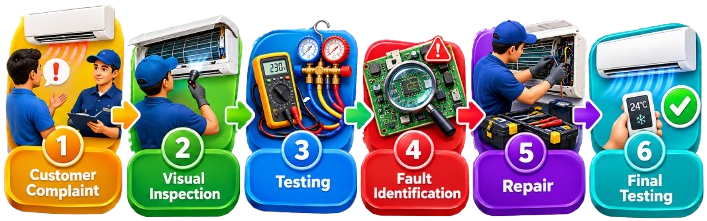
Customer Complaint → Visual Inspection → Testing → Fault Identification → Repair → Final Testing
The tools used at each stage can be different. This is why practical knowledge of tools is an important part of AC technician training.
1. Screwdriver Set
Screwdrivers are among the most basic tools in an AC technician's toolkit.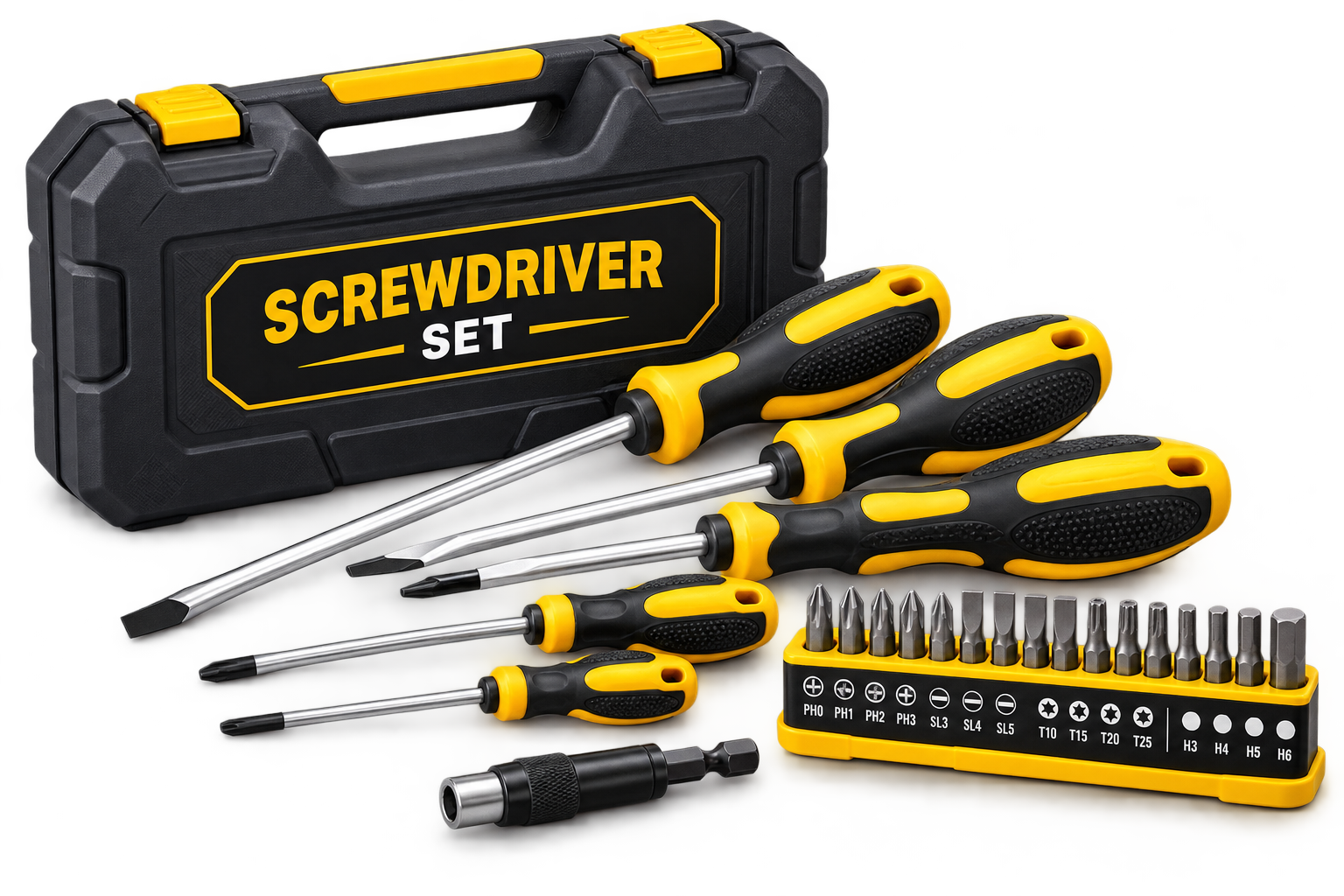
Technicians commonly use different types and sizes of screwdrivers to remove panels, open electrical covers, loosen terminals and access components inside the indoor or outdoor unit.
A technician may need both flat-head and Phillips-head screwdrivers because different screws can be used in an AC.
A good screwdriver is not just about convenience. Using the correct size helps reduce the chance of damaging the screw head or surrounding parts.
2. Spanner and Wrench Set
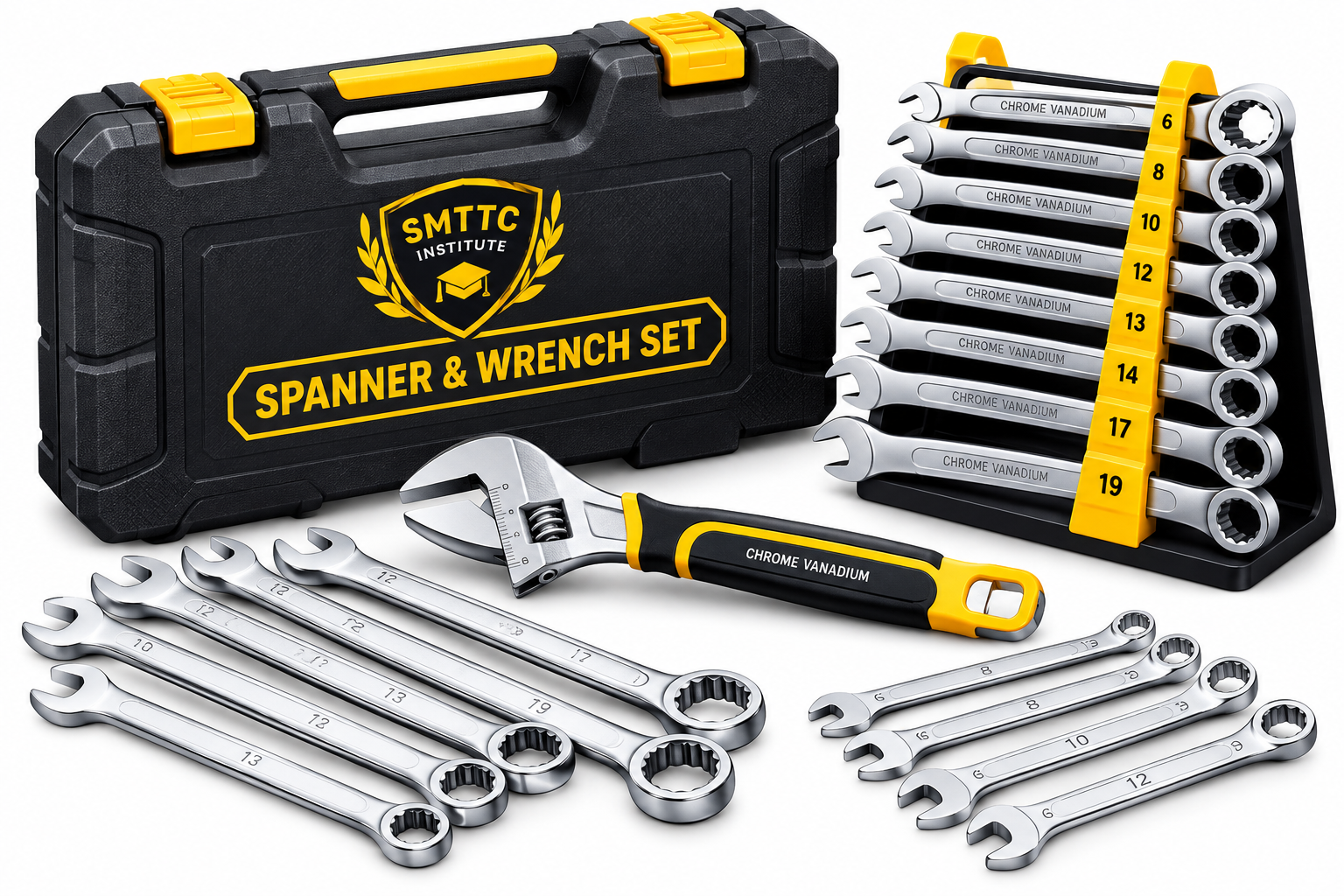 Wrenches and spanners are used for tightening and loosening nuts, bolts and connections.
During AC installation, servicing and repair work, technicians may encounter different types and sizes of fittings. Having the appropriate wrench helps them work with these connections properly.
An adjustable wrench can also be useful because its opening can be changed according to the size of the fitting.
For beginners, learning how much force to apply is just as important as knowing which wrench to use. Over-tightening a connection can create problems, while an improperly tightened connection may not provide the required seal or stability.
3. Pliers
Pliers are another common tool found in an AC technician's bag.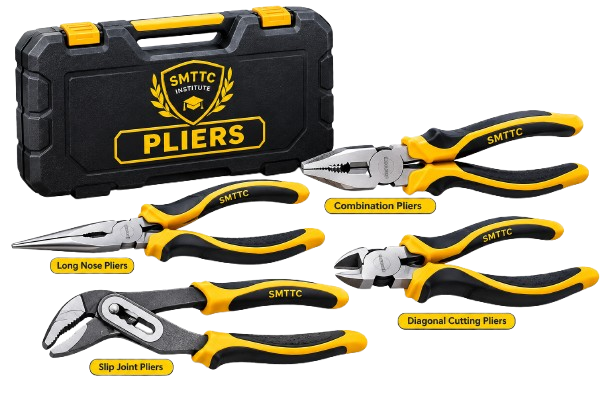
Different types of pliers can be useful for gripping, holding, bending or working with wires and small components.
For example, technicians may use combination pliers for general work and long-nose pliers when working in smaller spaces.
Wire-related work also requires appropriate tools rather than simply pulling or cutting wires with whatever is available. Good tool selection makes the job cleaner and safer.
4. Multimeter
The multimeter is one of the most important testing instruments for an AC technician.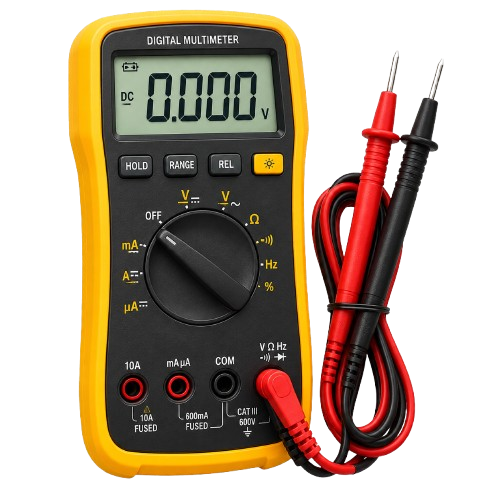
An AC can have a cooling complaint even when the actual problem is electrical. A technician may need to check relevant electrical values before deciding which component requires attention.
Depending on the meter and the testing situation, a multimeter can be used for measurements such as:
-
Voltage
-
Resistance
-
Continuity
-
Other electrical parameters supported by the instrument
For a beginner, the important point is that a multimeter is not simply a device that gives numbers. The technician needs to understand what is being measured, where to measure it and what the reading means.
This is why practical training is important when learning electrical testing.
5. Clamp Meter
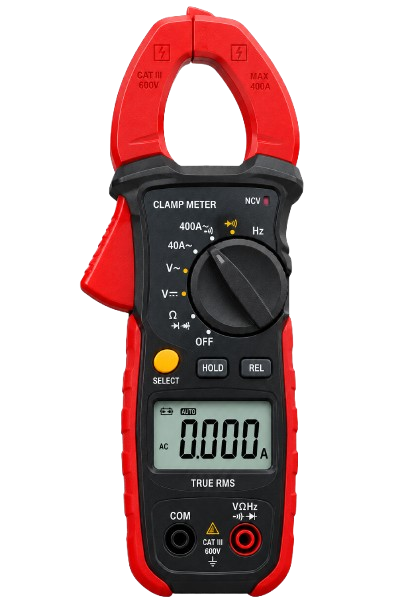 A clamp meter is another useful electrical testing instrument.
Unlike a conventional current measurement method that may require access to a conductor in a particular way, a clamp meter can measure current by clamping around a suitable conductor, depending on the meter and measurement procedure.
AC technicians may use current measurements as part of electrical diagnosis.
For example, if an AC is showing unusual electrical behaviour, checking relevant current values can provide useful information when combined with other tests.
Again, the reading should not be considered in isolation. A technician needs to understand the AC's operating condition and compare measurements appropriately.
6. Manifold Gauge Set
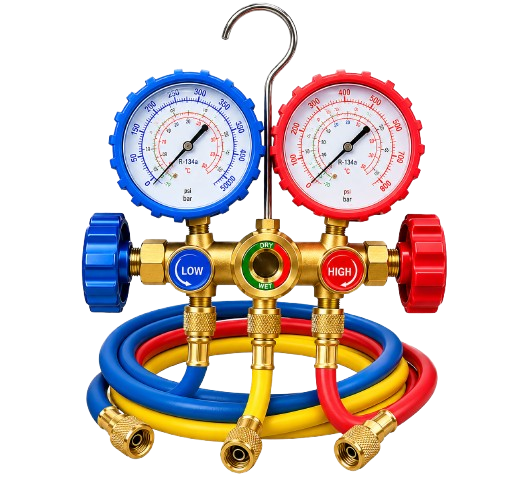
When people see an AC technician carrying a gauge set, they may wonder what it is used for.
A manifold gauge set is associated with checking pressure in refrigeration systems and performing certain service procedures.
It can help a trained technician understand what is happening within the refrigeration circuit when used correctly.
However, pressure readings should not be interpreted blindly. Refrigerant type, operating conditions, temperature and system design all matter.
This is one reason refrigeration-system training is an important part of becoming an AC technician.
7. Vacuum Pump
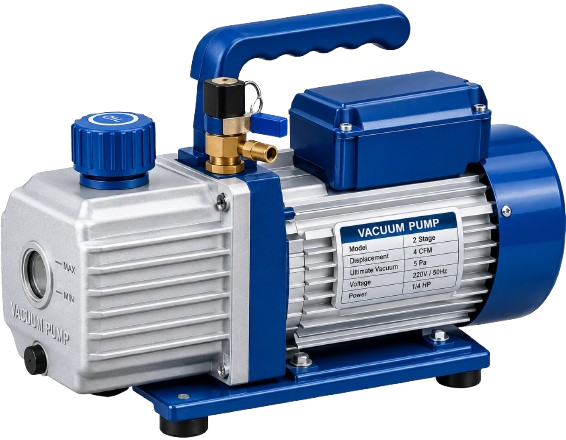
A vacuum pump is an important piece of equipment used during appropriate refrigeration-system service work.
Before certain refrigerant charging procedures, the refrigeration circuit may need to be evacuated to remove unwanted air and moisture.
A vacuum pump is used for this evacuation process.
For a beginner, it is useful to understand that vacuuming is not simply another step that a technician performs because it is part of the routine. Proper evacuation contributes to correct system preparation and helps support reliable refrigeration-system operation.
8. Refrigerant Charging Equipment
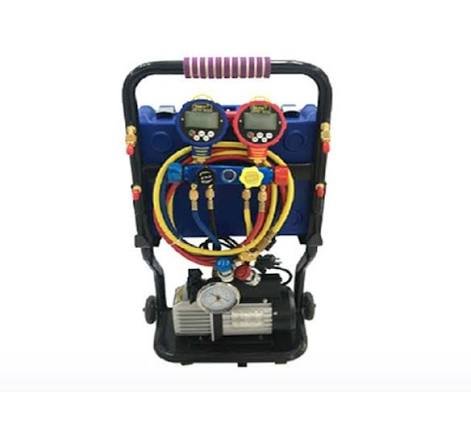 Refrigerant-related work requires appropriate equipment and proper technical knowledge.
Depending on the system and refrigerant, technicians may use suitable charging equipment along with gauges and other tools.
The important thing to understand is that refrigerant should not simply be added whenever an AC does not cool properly.
Poor cooling can have several causes. A technician should first diagnose the system and determine whether refrigerant-related work is actually required.
If there is a leak, simply adding refrigerant without addressing the underlying problem is not a complete repair.
9. Leak Detection Tools
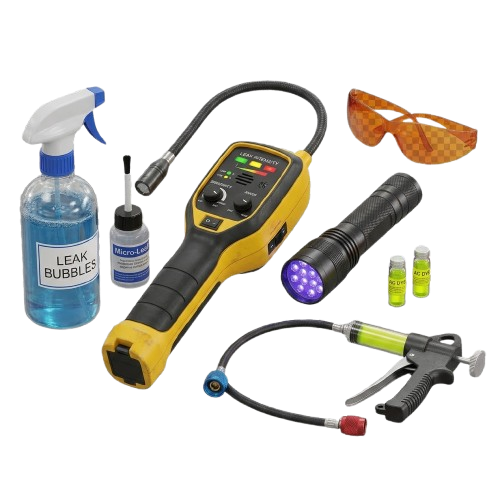
A refrigeration leak can affect AC performance and may require proper diagnosis.
Technicians can use suitable leak-detection methods and equipment depending on the system and situation. These may include electronic leak detectors or approved testing methods.
Leak detection requires patience because the source may not always be immediately visible.
A trained technician needs to understand where leaks can occur and how to test the system appropriately.
10. Tube Cutter and Flaring Tools
Copper tubing is an important part of many air-conditioning refrigeration systems.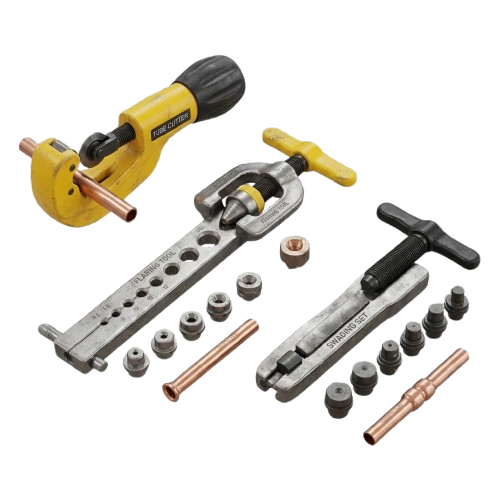
When working with tubing, technicians may use tools such as:
-
Tube cutters
-
Deburring tools
-
Flaring tools
-
Appropriate wrenches
A tube cutter helps produce a cleaner cut compared with using an unsuitable cutting method.
After cutting, the tubing may need proper preparation before making the required connection. Flaring tools are used for creating suitable flared connections in systems designed for them.
Correct technique matters because poor tubing preparation or connection can contribute to leakage and system problems.
11. Thermometer and Temperature Testing Tools
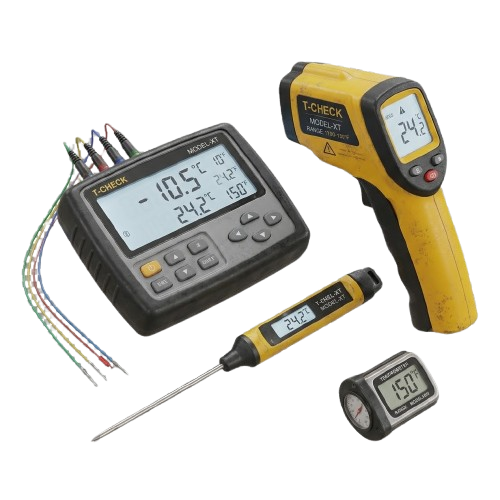 Temperature is an important part of understanding AC performance.
A technician may use a thermometer or other suitable temperature-measuring equipment to compare temperatures at relevant points in the system.
For example, temperature measurements can help the technician understand whether the AC is producing the expected cooling under the current operating conditions.
A temperature reading becomes more useful when combined with other information such as airflow, electrical measurements and refrigeration-system observations.
This is an important lesson for beginners: AC diagnosis usually involves multiple clues rather than one reading.
12. Electrical Testers
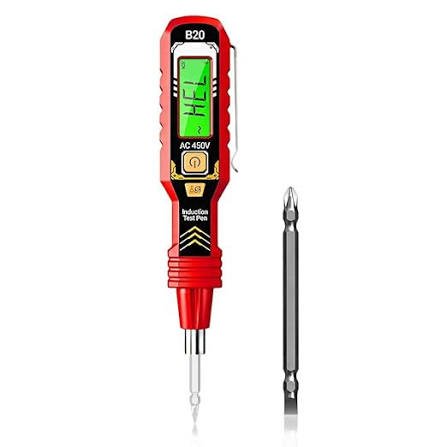 Electrical testers can be useful for checking electrical conditions during servicing and troubleshooting.
Different testing instruments have different purposes, so technicians should select the correct instrument for the particular task.
Working around electrical equipment also requires proper safety procedures. A technician should never rely only on experience or assumptions when dealing with potentially dangerous electrical conditions.
13. Cleaning and Servicing Tools
Not every AC problem is an electrical or refrigeration fault. Dirt and restricted airflow can also affect performance.
Technicians may therefore use cleaning equipment such as:
-
Cleaning brushes
-
Coil-cleaning equipment
-
Fin combs
-
Suitable cleaning accessories
-
Water-pressure cleaning equipment where appropriate
Cleaning the indoor and outdoor units can help maintain airflow and heat transfer when performed correctly.
A fin comb, for example, can be used for suitable condenser or evaporator-fin work when fins have become bent.
14. Safety Equipment
Safety equipment deserves just as much attention as repair tools.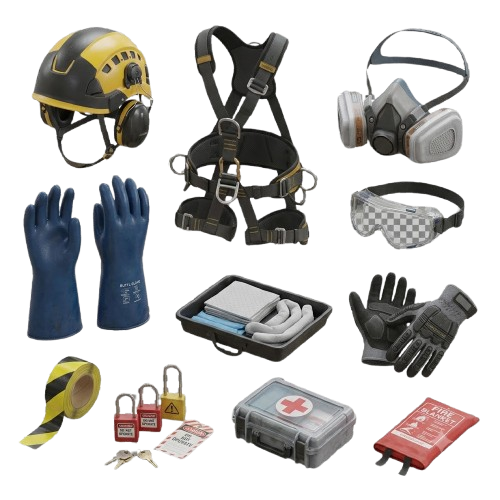
Depending on the task, an AC technician may need appropriate:
-
Safety gloves
-
Eye protection
-
Protective footwear
-
Electrical safety equipment
-
Suitable work clothing
AC servicing can involve electricity, rotating components, sharp metal edges, pressurized systems and other hazards.
A professional approach means thinking about safety before starting the job, not after something goes wrong.
Do AC Technicians Need Every Tool?
Not necessarily.
A beginner does not need to purchase every possible tool immediately. The tools required can depend on the type of work being performed, the AC system, the technician's responsibilities and the level of repair involved.
What matters more is understanding:
Which tool is required?
Why is it being used?
How should it be used?
What does the measurement tell us?
For example, simply owning a multimeter does not make someone good at electrical troubleshooting. The technician needs to understand the circuit, select the correct measurement and interpret the result.
The same principle applies to gauges, vacuum pumps, leak detectors and other specialized equipment.
Tools Are Only Useful When You Know How to Use Them
One common mistake beginners make is focusing only on learning tool names.
Knowing that a manifold gauge measures pressure or that a multimeter measures electrical values is only the first step.
Real troubleshooting involves connecting the tool to the problem.
Imagine an AC is not cooling properly. Instead of immediately assuming that the AC needs gas, a technician may first ask:
-
Is the unit receiving the required electrical supply?
-
Is the airflow normal?
-
Is the filter or coil excessively dirty?
-
Is the outdoor fan operating properly?
-
Are there unusual electrical readings?
-
Are there signs of a refrigeration-system issue?
-
Is there evidence of leakage?
-
Does the system behave normally after servicing?
The answers to these questions help the technician move from guessing to diagnosis.
Why Practical Training Matters for AC Technicians
You can find information about AC tools online, but reading about a tool is very different from using it during practical work.
Someone learning AC repair needs opportunities to understand how tools are selected, connected and used during real troubleshooting situations.
Practical training can introduce beginners to areas such as:
-
AC components and their functions
-
Electrical testing
-
Refrigeration-system basics
-
AC servicing procedures
-
Fault identification
-
Troubleshooting methods
-
Safe use of repair tools
-
Testing after repair
The goal is not simply to memorize a list of equipment. It is to develop the ability to understand a problem and use the appropriate tools to investigate it.
What Should a Beginner Learn First?
If you are completely new to AC repair, start with the fundamentals.
First understand the major AC components and how the cooling system works. Then learn basic electrical concepts and become familiar with common hand tools.
After that, you can gradually learn testing instruments such as the multimeter and clamp meter, followed by refrigeration-related tools and procedures under proper practical guidance.
A useful learning progression can be:
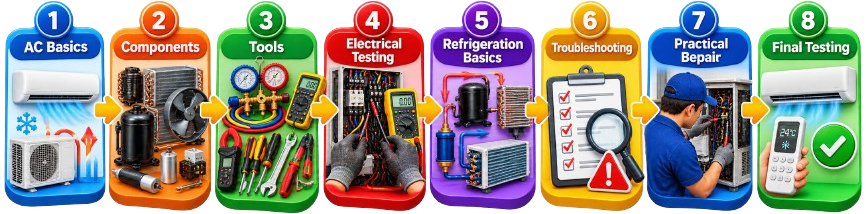
AC Basics → Components → Tools → Electrical Testing → Refrigeration Basics → Troubleshooting → Practical Repair → Final Testing
This approach is easier to follow than trying to learn every tool and repair procedure at the same time.
Learn AC Repair Through Practical Training
For anyone planning to build technical skills in air-conditioner servicing and repair, tool knowledge is an important foundation, but practical experience is what connects that knowledge to real work.
At SMTTC Institute, Patna, learners can develop practical understanding of AC repair and servicing, including the tools, components, testing methods and troubleshooting concepts used in technician work.
Whether you are starting from the basics or looking to develop practical technical skills, learning how tools are actually used during diagnosis can make the training much more meaningful.
The key is simple:
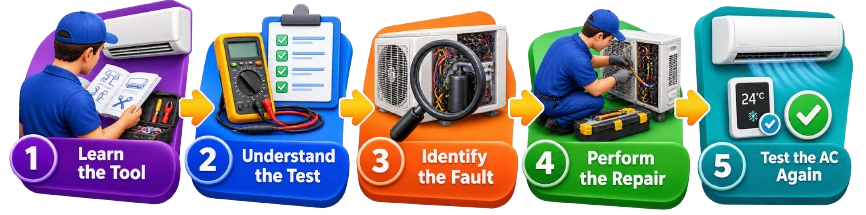
Learn the Tool → Understand the Test → Identify the Fault → Perform the Repair → Test the AC Again
That is how a collection of tools becomes a technician's working skill rather than just a toolbox.
Contact us :
SMART TECHNICAL TRAINING INSTITUTE
Near Hi-Tech Hospital saguna more Balaji Nagar new Tarachak danapur patna bihar 801503